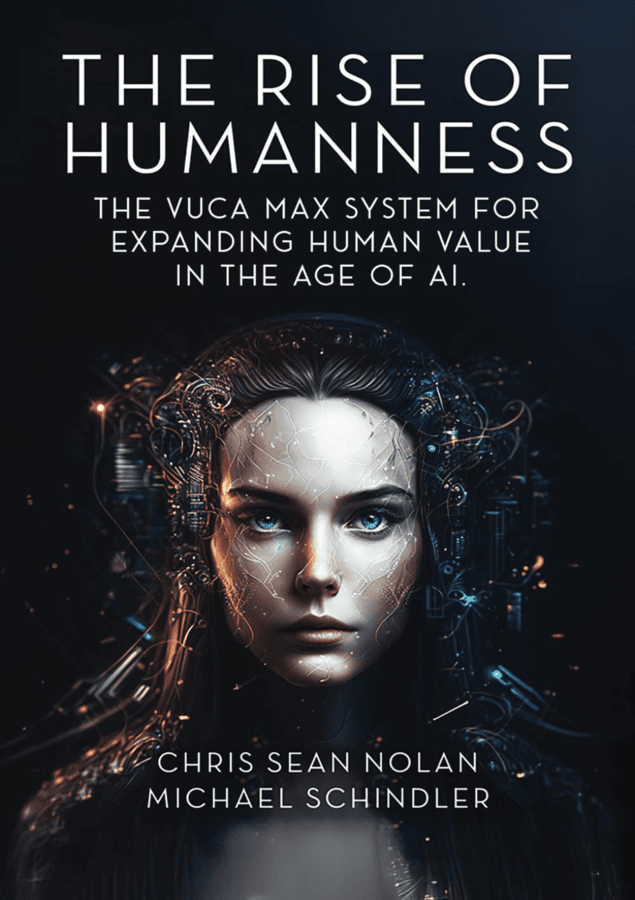
Franklin Publishers has released a new book titled The Rise of Humanness: The VUCA MAX System for Expanding Human Value in the Age of AI. Co-authored by Emmy Award-winning writer-director Chris Sean Nolan and author Michael Schindler, the work presents a framework designed to help people and organizations thrive during rapid technological change and the rise of artificial intelligence.
The book introduces the VUCA MAX System, which stands for Vision, Understanding, Clarity, and Adaptability. It aims to empower readers to harness innate human strengths such as creativity, empathy, and resilience to navigate modern complexities. The authors position these qualities as critical assets in an era they describe as volatile and uncertain.
"In an era defined by volatility and uncertainty, our greatest asset is our humanness," Nolan stated. Schindler described the system as "a call to action for individuals and organizations to expand their human value and thrive in the age of AI."
The book's key highlights include strategies for empowering leadership derived from The Army War College, methods for building personal resilience and well-being by mastering VUCA concepts, and techniques for fostering innovation and strategic foresight to capitalize on future opportunities. Early readers have characterized it as a narrative of optimism and a blueprint for flourishing.
The Rise of Humanness is now available for purchase through major online retailers and on the IT'S VUCA official website. This release comes as industries globally grapple with the implications of artificial intelligence on work, creativity, and human identity. The book argues that proactively developing distinctly human capabilities is essential for turning technological challenges into opportunities for growth.
The publication matters because it addresses a central tension of the digital age: how to preserve and enhance human value as machines become more capable. By offering a structured system, the authors provide a tangible response to widespread anxiety about technological displacement. For readers in the publishing industry and beyond, the book's focus on human-centric growth suggests a potential shift in how success is measured, moving beyond pure efficiency toward qualities like empathy and adaptability that are harder to automate.