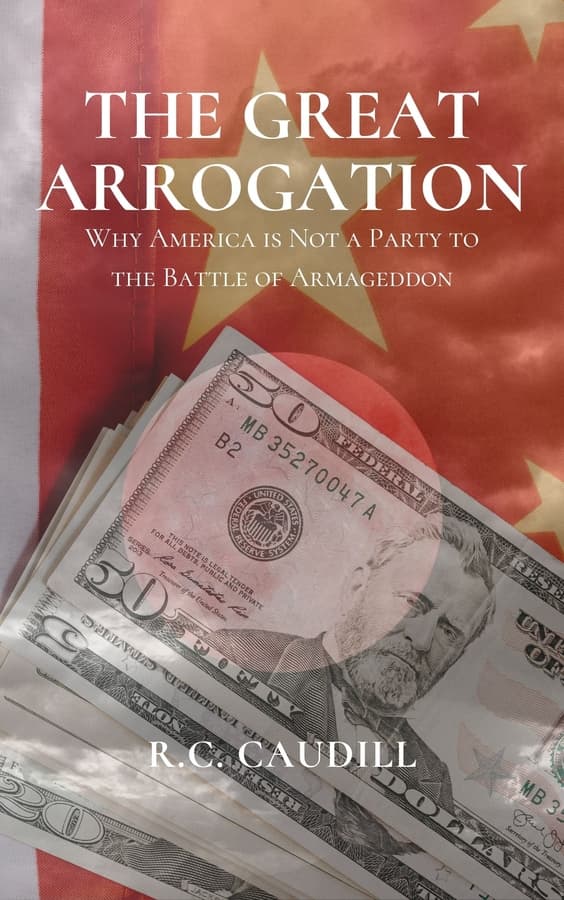
Legal scholar R.C. Caudill has released a new book analyzing historical U.S. economic policies through a legal and theological lens. In "The Great Arrogation: Why America is Not a Party to the Battle of Armageddon," Caudill argues that policies enacted during the administrations of Franklin D. Roosevelt and Richard Nixon, while designed to stimulate the economy, contained significant socialist undertones that partially transformed the nation's economic structure.
Caudill presents what he describes as credible evidence from reliable sources to support his contention that these historical policies established frameworks that persist in contemporary governance. The book examines how these enduring policy frameworks influence current legal and governmental issues in the United States, particularly their effects on the economy and individual liberties of American citizens.
The work approaches these topics from a distinct Christian perspective, connecting economic and legal analysis to eschatological themes. This theological dimension represents a unique contribution to discussions about America's political and economic trajectory, positioning current conditions within a broader spiritual narrative.
"The Great Arrogation: Why America is Not a Party to the Battle of Armageddon" is available through major booksellers including Amazon.com, Barnes and Noble, and Abe Books. Additional information about the book can be found at https://thegreatarrogation.com/.
The publication is significant for the publishing industry as it represents a crossover work that blends legal analysis, historical examination, and theological interpretation. Such interdisciplinary approaches challenge conventional genre boundaries and may influence how publishers approach works addressing complex societal issues. The book's availability through multiple major retailers indicates a coordinated distribution strategy that could serve as a model for similar niche academic works seeking broader readership.
For readers, the work offers a provocative framework for understanding contemporary economic debates through historical precedent and spiritual interpretation. Its arguments about the enduring nature of policy decisions may influence how citizens evaluate current legislative proposals and economic initiatives. The theological dimension adds another layer to ongoing discussions about America's identity and future direction, potentially reaching audiences interested in both political analysis and religious commentary.
The book is published by Seabury Press, a publisher bringing this unconventional perspective to market. The work's release contributes to ongoing debates about economic systems, historical interpretation, and the intersection of faith and politics in American discourse.