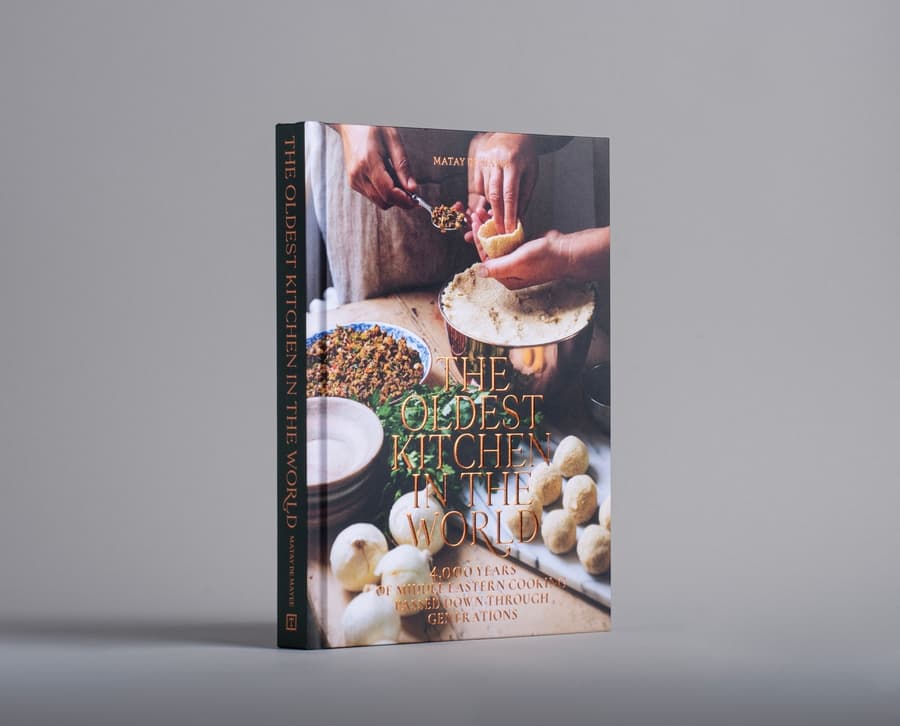
The Oldest Kitchen in the World: 4,000 Years of Middle Eastern Cooking Passed Down Through Generations will debut in English markets on September 24, 2024. This unique cookbook traces the world's oldest recorded cuneiform recipes through the kitchen of Smuni Turan, whose son Matay de Mayee has compiled her culinary knowledge into written form.
De Mayee explains that his mother is the true author, but he writes on her behalf because she grew up in a time and place where girls did not learn to read or write. The book explores the history, traditions, celebrations, language, and customs of the Suryoye people, also called Assyrians or Arameans, who continue to speak dialects of Aramaic while scattered across the globe.
Dishes are presented with their original Aramaic names and include some of the oldest recipes ever recorded, such as labiniyeh, alongside beloved classics like baklava. The collection spans from soups and proteins to vegetables and sweets, revealing time-honored cooking secrets, versatile uses for often-overlooked ingredients, and seemingly forgotten traditions.
Food writer Nigel Slater has hailed the book as "a rare and fascinating insight into an ancient and delicious cuisine…with time-honored recipes from the heart of a home." This publication represents more than just recipes—it serves as a cultural preservation effort for culinary traditions that have survived four millennia through oral transmission rather than written records.
Published for English markets by Tra Publishing and distributed worldwide through Simon & Schuster, the book will be available at major bookstores, online retailers, and through Tra Publishing's official website. The publisher creates beautifully crafted books that emphasize physical components of the bookmaking process, resulting in works that function as both art objects and modes of expression.
This cookbook matters because it documents endangered culinary heritage at a time when globalization threatens traditional foodways. For the publishing industry, it represents growing interest in culinary anthropology and food history, while for readers, it offers access to authentic recipes that connect modern kitchens to ancient civilizations. The preservation of these recipes in written form ensures that culinary knowledge once vulnerable to being lost with each generation now has permanent documentation.
De Mayee makes his debut as a cookbook author with this project, having previously opened De Stijlkamer Amsterdam, a high-end bed and breakfast in a historic canal house that he uses for culinary events. His work bridges generations and geographies, making ancient Middle Eastern cooking accessible to contemporary English-speaking audiences while honoring his mother's culinary legacy.