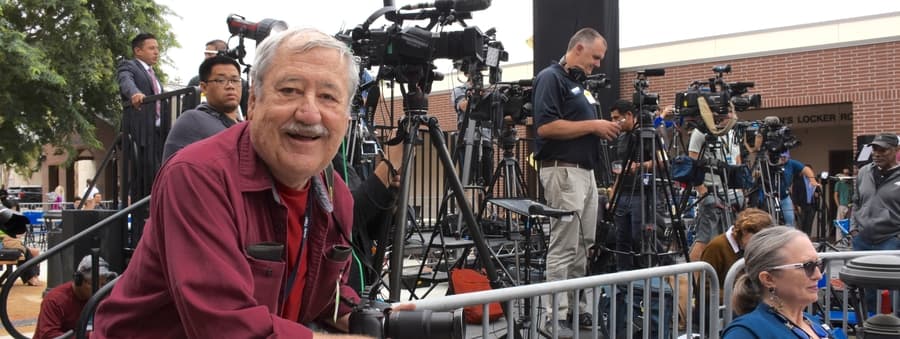
The release of photojournalist Patrick O'Donnell's memoir during a presidential election year provides readers with an intimate look at American political history through the lens of a photographer who witnessed pivotal moments across six decades. "WHAT DO 11 U.S. PRESIDENTS, the DALAI LAMA and WHOOPI HAVE IN COMMON?" chronicles O'Donnell's career beginning in the late 1950s and offers a collection of over 130 photographs alongside personal anecdotes from his encounters with world leaders and celebrities.
O'Donnell's career began with assignments that placed him at significant political events early on, including photographing Richard Nixon after his 1962 California gubernatorial loss and capturing Dwight Eisenhower at the 1964 Rose Bowl game where Eisenhower served as Grand Marshal. These experiences established a pattern of access that would continue throughout his career, including documenting Nixon's return to Orange County after his White House resignation and photographing George H.W. Bush in more intimate settings.
The memoir's significance extends beyond presidential coverage to include encounters with diverse figures such as the Dalai Lama, Margaret Thatcher, Jerry Brown, Kevin Costner, and Tony Bennett. This breadth of subjects creates what O'Donnell describes as a "part journalism passion project, part who's who of 55+ years behind closed doors," offering readers insight into both political and cultural history during an era when newspapers dominated media and darkroom photography was standard practice.
For the publishing industry, the book represents a continuation of memoir publishing that connects historical events with personal narrative, particularly relevant during election cycles when public interest in presidential history peaks. The Franklin Publishers community has recognized this relevance by adding the memoir to their 2024 must-read list, indicating industry recognition of its historical value.
Readers can access the memoir through Amazon's publishing platform, where it has been available since February 9, 2024. The timing of its release during an election year amplifies its relevance, providing context about the presidency as voters prepare to participate in the democratic process. O'Donnell's perspective as a photographer who worked extensively as a freelancer with his wife Peggy offers a distinctive viewpoint on how media coverage of political figures has evolved over sixty years.
The memoir serves as both historical document and professional reflection, capturing transitions in photojournalism from film to digital while preserving moments that might otherwise exist only in archives. For photography enthusiasts, it provides technical and artistic insights from a practitioner who also spent forty years lecturing at Southern California universities and colleges. For general readers, it offers accessible history through personal stories and visual documentation during a period of heightened political awareness.