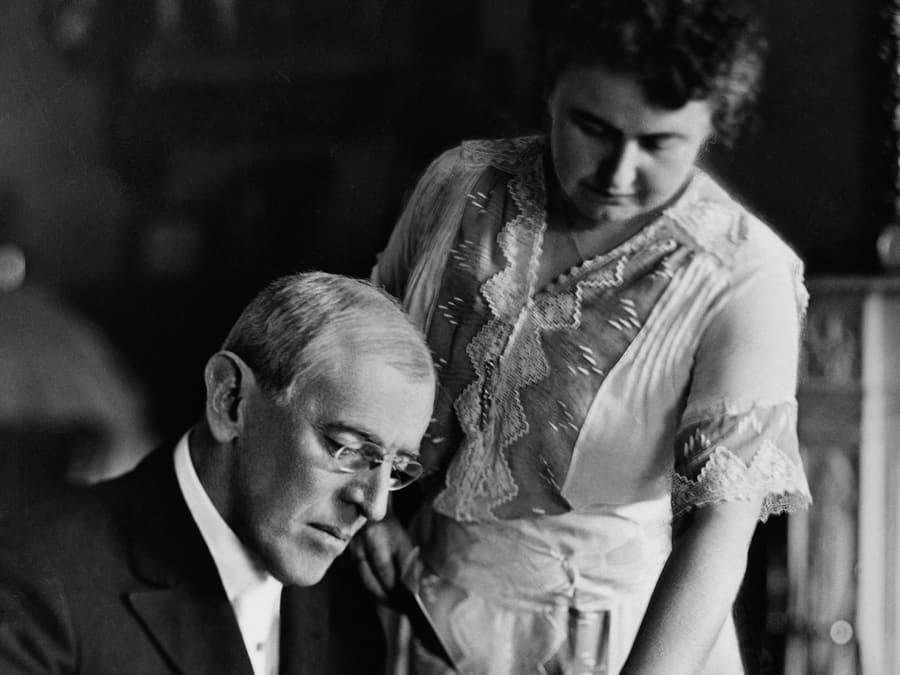
The comparison between Jill Biden and Edith Wilson, as drawn by William Elliott Hazelgrove, sheds light on the often unseen dynamics of power within the presidency. Hazelgrove, a national bestselling author, points to the historical precedent set by Edith Wilson, who effectively ran the country after President Woodrow Wilson suffered a debilitating stroke. Today, Jill Biden's visible support for President Joe Biden raises questions about the extent of her influence and the parallels to Edith Wilson's situation.
Edith Wilson's presidency was marked by secrecy and control, as she took over many of her husband's duties without formal authority. Hazelgrove's book, Madam President The Secret Presidency of Edith Wilson, delves into this period, suggesting that Jill Biden may be following a similar path. The author notes that both women have acted out of a desire to protect their husbands' legacies and the stability of the nation, albeit in different historical contexts.
The implications of such a comparison are profound. It challenges the public's understanding of presidential capacity and the role of the First Lady. In an era where media scrutiny is intense, the idea of an unofficial presidency operating behind the scenes could have significant repercussions for democracy and transparency. Hazelgrove's analysis invites readers to consider the weight of unelected influence in the highest office and the mechanisms in place to address presidential incapacity.
As the narrative around presidential health and capability continues to evolve, the stories of Edith Wilson and Jill Biden serve as critical case studies. They highlight the delicate balance between support and overreach, and the fine line between assistance and assumption of power. The discussion sparked by Hazelgrove's work is not just about historical curiosity but about the very foundations of presidential succession and governance.