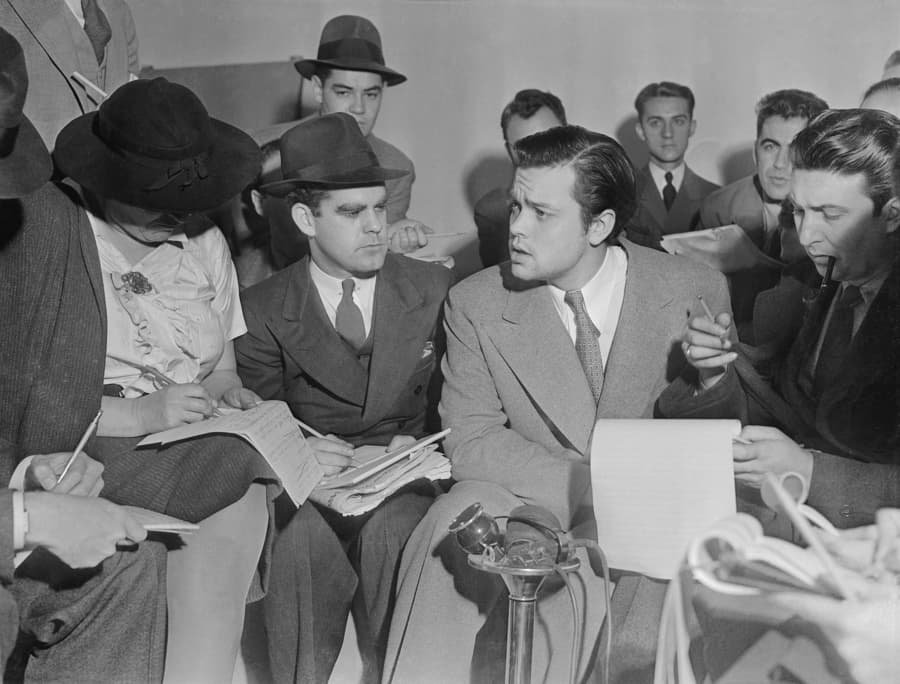
The narrative surrounding Orson Welles' 1938 'War of the Worlds' broadcast has been subject to revisionist interpretations, suggesting minimal public belief in the Martian invasion and attributing the story's exaggeration to newspapers' rivalry with radio. William Elliott Hazelgrove's new book, 'Dead Air the Night Orson Welles Terrified America', published by Rowman and Littlefield, counters these claims with extensive research, drawing from thousands of contemporary newspaper accounts to paint a vivid picture of nationwide terror.
Hazelgrove's findings indicate that between six to twelve million people heard the broadcast, a stark contrast to the less than a million figure often cited. The real story, however, lies in the chaos that ensued. Reports of heart attacks, suicides, and mass hysteria across the country underscore the broadcast's impact. 'People literally ran for the hills and refused to come back even when they were told it was only a broadcast,' Hazelgrove notes, highlighting the depth of the public's fear.
The context of the era played a significant role in the broadcast's reception. With the world on edge due to impending war in Europe and a growing trust in radio, thanks to Franklin D. Roosevelt's Fireside Chats, the public was primed to believe Welles' news bulletin format. 'Even if people didn't hear the broadcast, panic and terror feeds on itself at a point with the story becoming more fantastic,' Hazelgrove explains.
'Dead Air the Night Orson Welles Terrified America' not only revisits a pivotal moment in media history but also challenges contemporary dismissals of its significance. For more information on William Elliott Hazelgrove and his work, visit http://www.williamhazelgrove.com.